Human-Centric Agentic Mobility Services
Human-centered agency is the missing bridge from foundation-model agents to trustworthy mobility services.
About the workshop
Autonomy refers to the capacity to operate under internal rules without external control, consistent with SAE driving automation levels. However, recent deployments of foundation-model agents in vehicles, fleets, and traveler-facing assistants demonstrate capabilities that autonomy alone does not encompass: handling underspecified goals, engaging socially with passengers and other road users, using tools, and reasoning in ethically complex, high-stakes situations. These capabilities are captured by agency. As semi- and fully autonomous AI agents rapidly integrate into society, understanding their failure modes and evaluation requirements is critical.
We use the term agentic mobility services (AgMS) to describe systems—spanning vehicles, fleets, infrastructure, and traveler-facing assistants—that act as goal-directed, socially engaged, and accountable actors on behalf of travelers, operators, and cities. Agency introduces a relational dimension that autonomy lacks: a mobility agent must interpret the goals of a specific traveler or operator, earn and calibrate their trust, and remain accountable when errors occur. Human-centricity is therefore an essential component of a mobility agent's technical specification.
Human-Centric AgMS is a one-day workshop that brings together the AI agents, autonomous driving, transportation, and human-AI interaction communities around a single question:
What does it take for agentic AI to operate reliably, cooperatively, and accountably when embodied in the systems that move people and goods?
We welcome theoretical, algorithmic, empirical, benchmark, systems, and position contributions. The program pairs eight invited talks in four themed sessions, one per topic theme, with spotlights and posters on the same themes, a moderated panel that spans the four communities, and an open roadmap discussion.
Topics
Contributions are organized around four themes. See the call for papers for submission details.
Agentic vehicles and in-cabin services
In-vehicle copilots and driving agents built on LLM, VLM, and VLA models. Multimodal context modeling and situational awareness across the cabin and the road scene. Grounding language and plans in vehicle perception and control. World models of traffic scenes. Memory, reflection, and tool use at latencies that vehicles require. Degrees of vehicle agency.
Agentic fleets, transit, and traffic
Robotaxi dispatch and rebalancing. Agentic orchestration of ride-hailing, transit, curbside, charging, and logistics. Negotiation among vehicle, infrastructure, and traffic management agents. Multi-agent reinforcement learning and LLM-based reasoning at network scale. Generative-agent simulation of travelers and cities.
Travelers, drivers, and road users
Interpreting and negotiating trip goals in natural language. Driver and traveler state understanding. Explanation and theory of mind in the cabin. Personalization and long-term memory of traveler preferences. Trust calibration in and around automated vehicles. Accessibility. Communication with pedestrians and other road users.
Trustworthy deployment on real roads
Benchmarks that measure mobility agency beyond driving metrics. Road safety consequences of hallucination, goal drift, and adversarial manipulation. Verification, runtime assurance, and staged rollout of services at city scale. Alignment with traveler and societal values. Privacy and accountability in deployed mobility services.
Call for Papers
We invite research papers, position papers, benchmark and dataset papers, and systems and demonstration reports on agentic AI in the systems that move people.
Submissions
- Three contribution types: (1) research papers, (2) position, benchmark, or dataset papers, and (3) systems and demonstration reports.
- Up to 4 pages excluding references, in the AAAI-27 author kit format.
- Submissions may be unpublished, in progress, concurrently submitted, or recently published work.
- Double-blind review through OpenReview, with at least two reviews per submission.
- All accepted contributions are non-archival. Working notes are posted on this site with author consent.
- Most accepted papers are presented as posters, and a smaller number are selected as spotlight talks in the themed session that matches their topic.
- Authors of the strongest contributions will be invited to submit extended versions to the journal Artificial Intelligence for Transportation.
- Early-stage work, position papers, benchmark proposals, and negative results are explicitly welcome.
Important dates
- October 2, 2026Call for papers released
- November 20, 2026Submission deadline
- December 2, 2026Notification of acceptance
- January 15, 2027Talk titles and schedule posted
- February 22 or 23, 2027Workshop at AAAI-27, Montréal (one day, in person, exact day to be confirmed)
Speakers
The workshop features eight invited talks in four themed sessions and a moderated panel with leading researchers from AI, transportation, and human-AI interaction. Invited speakers present recent advances at the frontier of the workshop themes. Panelists are chosen for their breadth across the AI agents, autonomous driving, transportation, and human-AI interaction communities.
Invited speakers and panelists

Flora Salim
University of New South Wales (UNSW) Sydney
Research on foundation models for spatio-temporal data in transport.
Additional speakers and panelists will be announced soon.
Panel: "Which decisions should mobility agents own, and who is accountable?"
The moderated panel leads a debate on deployment and governance that cuts across the AI agents, autonomous driving, transportation, and human-AI interaction communities, and it shapes the closing roadmap discussion.
Advisory chairs
Advisory chairs steer the scientific scope of the workshop, advise on the review process, help recruit the program committee and speakers, chair the awards for the best contributions, and connect the workshop to their communities. They may also deliver talks.
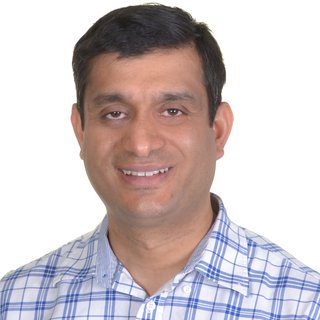
Aditya Mahajan
McGill University and Mila
Advisory ChairResearch on stochastic control and reinforcement learning.

Jian Tang
HEC Montréal and Mila
Advisory ChairCanada CIFAR AI Chair with research on graph machine learning and foundation models.

AJung Moon
McGill University and Mila
Advisory ChairResearch on human-robot interaction and AI ethics.

Peter Stone
The University of Texas at Austin and Sony AI
Advisory ChairResearch on reinforcement learning and multi-agent systems.

Hai Yang
The Hong Kong University of Science and Technology (HKUST)
Advisory ChairChair Professor and Editor-in-Chief of Transportation Research Part B.
Program
A one-day, in-person workshop at AAAI-27 in Montréal on February 22 or 23, 2027 (exact day to be confirmed), running from 08:45 to 17:30. The day is organized as four themed sessions of 75 minutes, one per topic theme, each pairing two invited talks with spotlights on the same theme.
| Time | Session |
|---|---|
| 08:45-09:00 | Opening remarks |
| 09:00-10:15 | Session I (agentic vehicles and in-cabin services): Invited Talks 1 and 2 with Q&A, and themed spotlights |
| 10:15-10:45 | Coffee and Poster Session A |
| 10:45-12:00 | Session II (agentic fleets, transit, and traffic): Invited Talks 3 and 4 with Q&A, and themed spotlights |
| 12:00-13:15 | Lunch and informal discussion clusters |
| 13:15-14:30 | Session III (travelers, drivers, and road users): Invited Talks 5 and 6 with Q&A, and themed spotlights |
| 14:30-15:00 | Coffee and Poster Session B |
| 15:00-16:15 | Session IV (trustworthy deployment on real roads): Invited Talks 7 and 8 with Q&A, and themed spotlights |
| 16:15-17:05 | Moderated panel: "Which decisions should mobility agents own, and who is accountable?" |
| 17:05-17:30 | Open roadmap discussion, best contribution awards, and closing |
The final schedule with talk titles will be posted by January 15, 2027. The poster sessions have a mentoring focus and give students and junior researchers direct feedback from senior participants.
The workshop takes place at the AAAI-27 conference venue in Montréal, Canada. The workshop is in person only, and no virtual presentations will be offered, in line with AAAI-27 policy.
Organizing Team
The organizing team combines expertise in human-centered AI and human-vehicle interaction, agentic transport systems, ethical automated driving, driver behavior modeling, and AI for smart mobility across academia and industry.
Organizing committee

Jiyao Wang
McGill University
Lead OrganizerIVADO Postdoctoral Fellow working on human-centered AI for mobility, covering agentic vehicle systems and human-vehicle interaction.

Jiangbo Yu
McGill University
OrganizerAssistant Professor of Civil Engineering and director of the Human-Machine Transportation Systems Lab. Research on agentic transport systems, from demand forecasting to the operation of agentic mobility services.

Hongliang Lu
Southern University of Science and Technology (SUSTech)
OrganizerAssistant Professor of Mechanical and Energy Engineering. Research on human-like and ethical decision-making for automated driving and embodied intelligence.
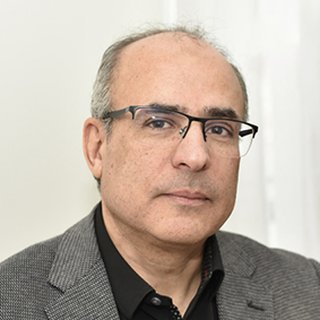
Alaa Khamis
King Fahd University of Petroleum and Minerals (KFUPM)
OrganizerAssociate Professor of Industrial and Systems Engineering and director of the AI for Smart Mobility Lab. Formerly AI and Smart Mobility Technical Leader at General Motors. Chairs the IEEE ITSS Saudi Chapter.

Xiao Wen
The Hong Kong University of Science and Technology (HKUST)
OrganizerResearch Assistant Professor of Civil and Environmental Engineering. Research on driver behavior modeling, reinforcement learning, and traffic safety.
Supporting team

Aaron Tian
Toyota
Publicity ChairContact
For questions about submissions, the program, or participation, please contact jiyao.wang@mcgill.ca.